
Published . Updated .
A great location for a digital sign is where the people you want to reach already pass or wait, with nothing blocking the view and a sign sized for how far away they will be. For new customers, that means busy footpaths, intersections and places where people gather. For people already inside, it means aisles, counters and waiting rooms.
A digital sign can go almost anywhere, but the best spot depends on what you want it to do. A sign meant to catch new customers needs a different place from one meant to help people decide what to buy. Here is how to choose.
Where will a sign be seen by the most people?
If the goal is to reach as many people as possible, put the sign where crowds already pass. That applies to any message: something to buy, information, directions or safety notices. Good spots include:
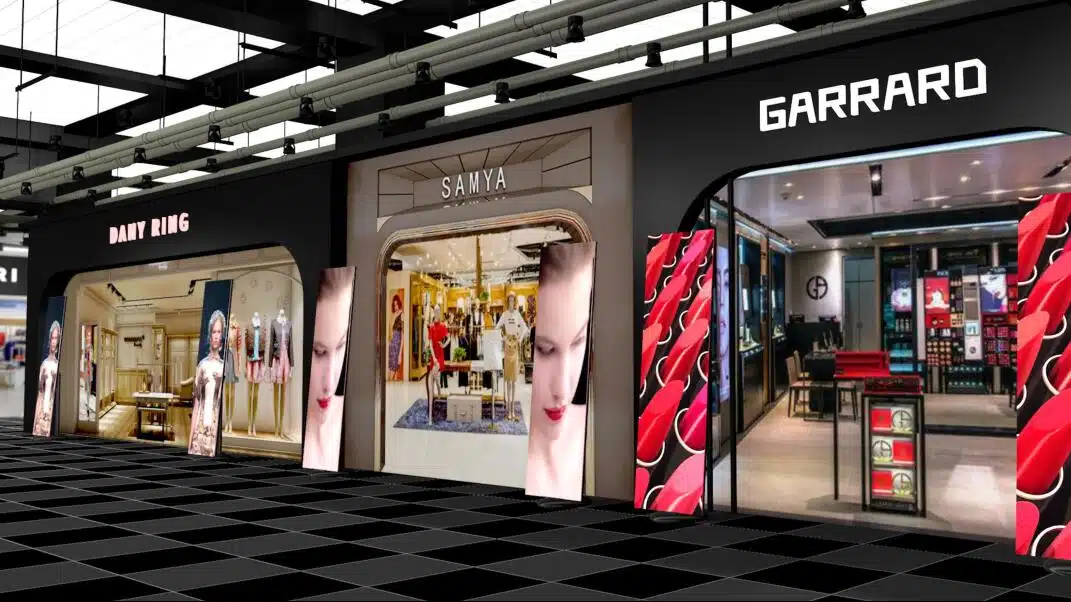
- Busy footpaths. The front window of a shop, bar or restaurant on a shopping street or commuter route. See digital window displays for retail stores.
- Roads and intersections. Larger outdoor signs catch the eye of drivers and passengers, most of all where traffic slows or stops: at traffic lights, junctions and in 40 or 50 km/h zones.
- Places where people gather. School foyers, reception areas at leisure centres and offices, shopping centre entries, council buildings, the gates of a sports ground and waiting areas at stations.
Add a web address or QR code, so people who are interested can find out more straight away.
Which spots help people decide?
Once someone is inside, they have already shown some interest. A sign here helps them take the next step, such as buying, booking, donating or signing up. Good spots include:
- Inside a store or restaurant. At the end of an aisle or beside a display, a screen with clear information can help someone make up their mind.
- At the counter. This is where customers add a large drink, a side or a meal instead of a single item. A screen here suggests the extras at the moment people are paying.
- Waiting rooms and lifts. People waiting for an appointment or riding a lift have time to read, and not much else to look at.
- Staff areas. A screen in a break room can share job openings, team news and safety reminders with staff.
What should you check on site?
- Line of sight. Make sure nothing blocks the sign from where people will be: trees, posts, parked cars or other signs.
- Height and distance. How far away people will be decides the size of the sign and the pixel pitch. Try different sizes in our pixel pitch planner.
- The sun. A sign facing the afternoon sun has to be bright enough to read. Our FA2 outdoor range reaches more than 10,000 nits.
- Two directions. If traffic passes both ways, a double-sided sign catches both, and each side can show its own message.
- Power. A fixed sign needs power at the site. For a short-term spot with no power, a solar trailer sign from our hire range does the job.
- Approval. Many outdoor signs need council approval. See our guide to council approval for LED signs.
A few examples
- A cafe: a screen in the window for passers-by, and a menu board at the counter.
- A school: an outdoor sign at the front gate, and a screen in the foyer.
- A sports club: a sign at the ground entry, and sponsor screens by the canteen.
- A council: an entry statement at the edge of town, and a screen in the library.
Try a few spots
The best location is the one that puts your message in front of the most people who matter to you. Don’t be afraid to try a sign in a few spots before you settle on one. A hire sign is an easy way to test a location before you commit to a fixed sign.
We design and build indoor LED displays, outdoor LED signs and full colour LED screens for all kinds of sites. Send us a photo of the spot and we will suggest a size and a design. Get in touch, or call Aaron on 0416 053 335 or the office on (08) 9335 7944.
